Mapping Group Response Variations to Merged Challenge Types in Networked Entertainment Ecosystems
Logan Schmitt · Oct 7, 2026
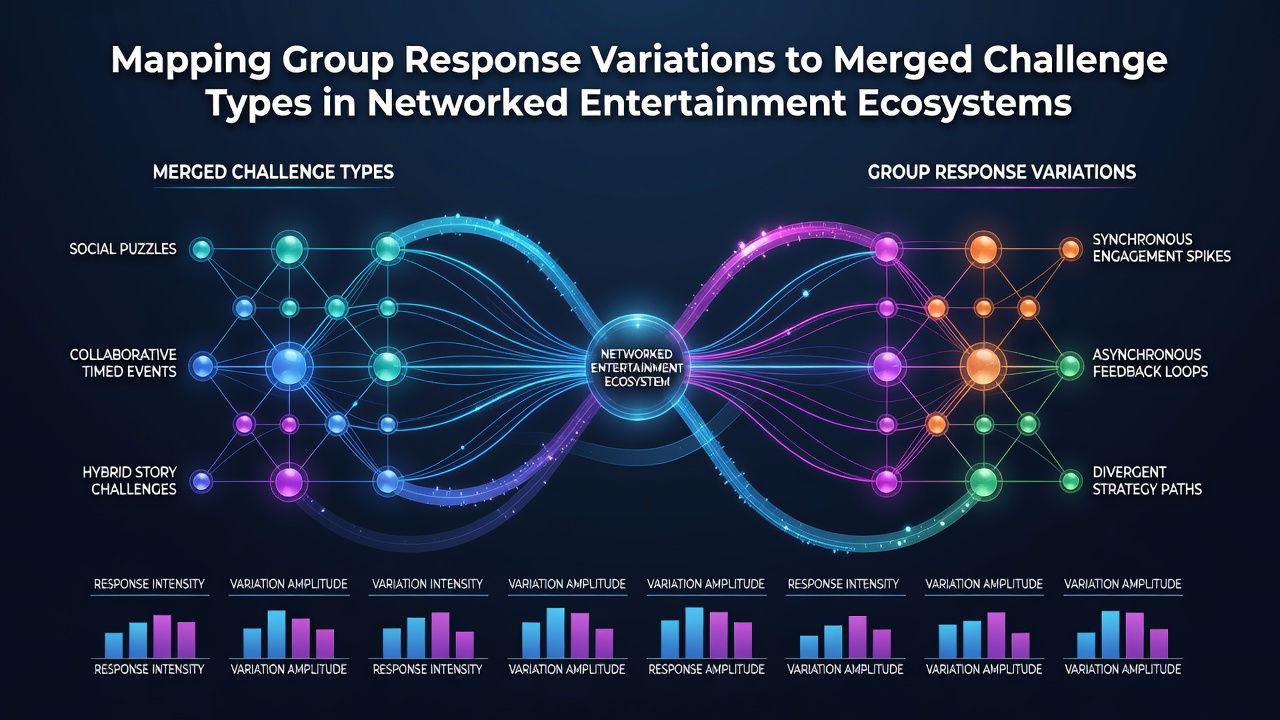
Mapping Group Response Variations to Merged Challenge Types in Networked Entertainment Ecosystems
Networked entertainment ecosystems now integrate multiple challenge categories into single sessions, and researchers track how groups adjust their collective behaviors under these conditions. Data from distributed gaming platforms reveal patterns where combined elements such as timed navigation tasks and resource allocation decisions produce measurable shifts in team coordination metrics. Studies conducted through 2025 and into October 2026 document these variations across thousands of concurrent sessions, with findings released during industry forums that month highlighting latency effects on decision sequences.
Defining Merged Challenge Structures
Platforms combine action sequences with strategic layers in real time, which creates hybrid scenarios that differ from isolated puzzle or racing formats. Observers note that players encounter simultaneous demands on spatial awareness and tactical planning, and system logs capture response times that vary by group size and connection stability. Research indicates that these merged structures appear more frequently in titles supporting cross-region matchmaking, where server architectures route inputs through predictive algorithms designed to maintain session continuity.
Measurement Approaches in Current Use
Analysts apply graph-based models to map interactions between participants, recording how one subgroup's choice influences the options available to others in the same instance. Figures from platform telemetry show that groups facing dual-layer objectives allocate attention unevenly, with some members prioritizing immediate movement cues while others focus on shared inventory management. According to reports issued by the Entertainment Software Association, session data collected in 2026 demonstrates that such allocations correlate with overall completion rates across different network conditions.
Network operators deploy synchronization protocols that adjust for regional latency differences, and these adjustments alter the timing windows available for group consensus. Evidence suggests that shorter prediction horizons lead to more fragmented responses when challenges require both rapid input and longer-term planning. Those who examine log files from large-scale deployments observe that clusters of players in high-latency zones exhibit delayed synchronization on merged objectives compared with low-latency clusters.
Documented Variations Across Player Groups
Group size influences how variations manifest, since smaller teams process information through fewer communication channels while larger ones distribute roles more explicitly. Data collected during October 2026 testing phases indicated that four-person units completed hybrid sequences with tighter timing distributions than eight-person units under identical network loads. Researchers at distributed simulation centers record these differences through timestamped event streams that tag each action to its originating participant.
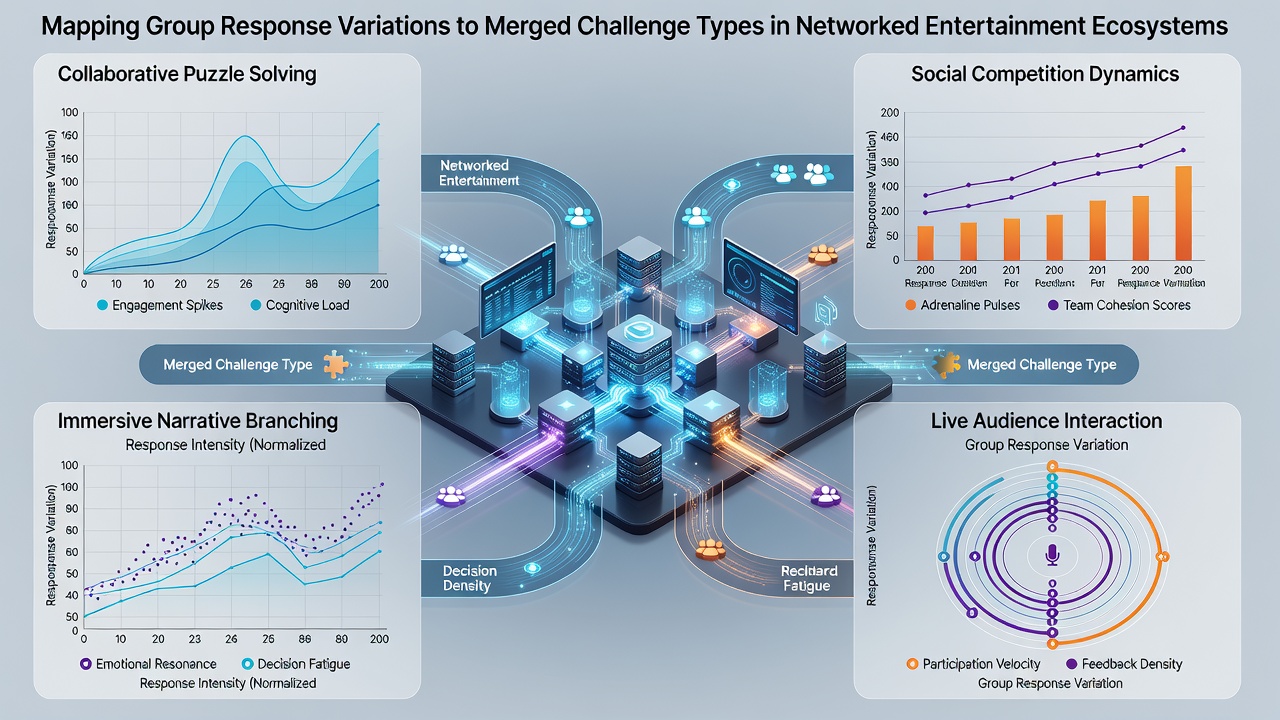
Demographic factors also appear in the datasets, yet platform operators anonymize individual identifiers before analysis. Patterns emerge when comparing cohorts that share similar hardware configurations, where input device differences affect the precision of coordinated maneuvers. A separate study released by the Canadian Digital Technology Adoption program tracked resource-sharing behaviors across merged challenge sets and found that groups using standardized controllers showed narrower variance in response intervals than those relying on mixed input methods.
Network Conditions and Their Influence
Packet loss rates directly impact the fidelity of shared state information, which in turn changes how groups adapt to evolving objectives. When loss exceeds certain thresholds, participants rely more on local prediction models, and aggregate performance metrics diverge from baseline expectations. System administrators implement adaptive buffering techniques that smooth these disruptions, although residual effects remain visible in post-session analytics.
Geographic distribution of participants further modulates outcomes, since routing paths between continents introduce variable delays that compound during peak usage windows. Reports compiled in late 2026 note that sessions spanning multiple continents display wider spreads in decision latency than intra-regional sessions, even when total participant counts remain constant. Engineers continue to refine routing tables to mitigate these spreads without altering core gameplay logic.
Analytical Frameworks Applied to Response Data
Statistical clustering methods group similar response sequences, allowing observers to identify recurring adaptation strategies across thousands of recorded matches. These clusters reveal that certain merged challenge combinations trigger more frequent role specialization within teams, whereas others promote parallel task execution. Machine learning classifiers trained on historical telemetry achieve increasing accuracy in forecasting which cluster a new session will follow based on initial network and group parameters.
Visualization tools render these clusters as layered graphs that highlight points of divergence, and analysts use them during post-release evaluations to guide balance adjustments. Platform providers share aggregated summaries with academic partners under controlled data agreements, which expands the sample sizes available for longitudinal comparisons spanning multiple years of ecosystem growth.
Conclusion
Mapping efforts continue to refine the representation of group dynamics under blended challenge conditions, drawing on expanding datasets that now include October 2026 releases. The resulting models support iterative improvements in matchmaking algorithms and synchronization layers, while preserving the factual record of observed variations across networked entertainment environments. Continued collection of telemetry from diverse regions sustains the accuracy of these mappings as ecosystems evolve.