Server Architectures Shaping Coordinated Tactics in Distributed Platforms That Merge Narrative Exploration with Tactical Planning and Velocity Contests
Logan Schmitt · Oct 21, 2026
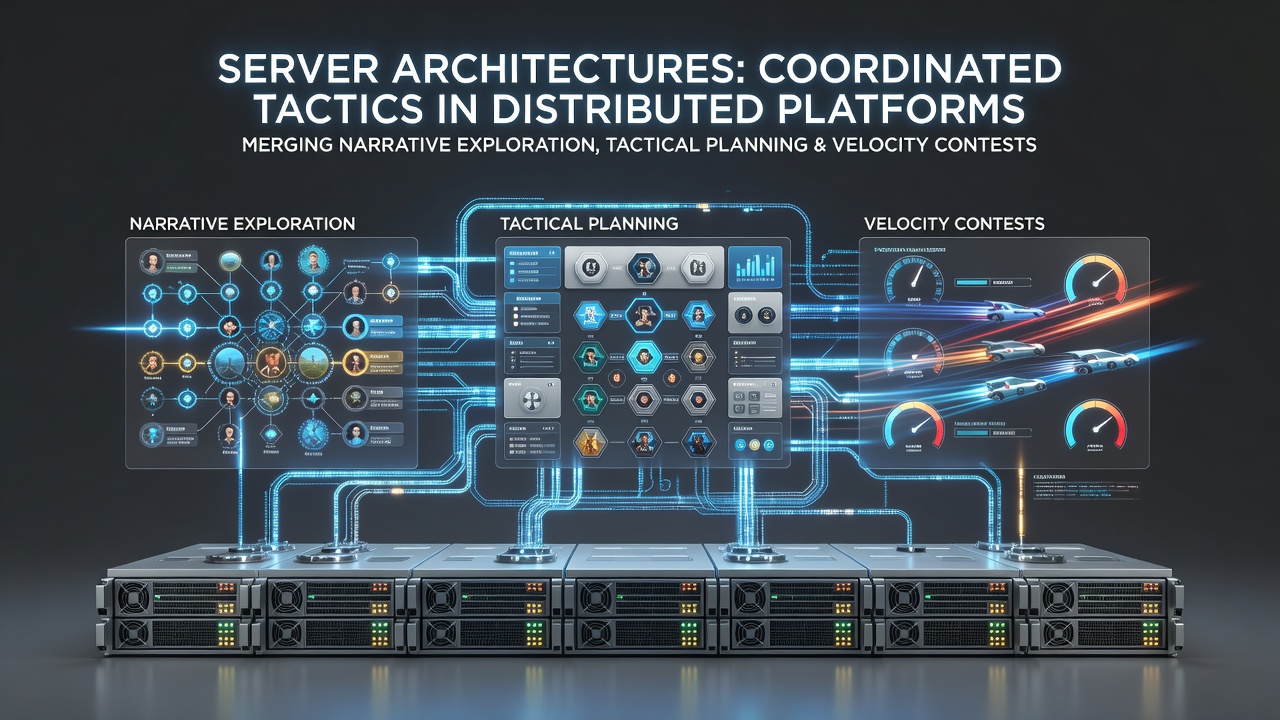
Server Architectures Shaping Coordinated Tactics in Distributed Platforms That Merge Narrative Exploration with Tactical Planning and Velocity Contests
Server architectures determine how distributed platforms manage the interplay between narrative exploration, tactical planning, and velocity contests in multiplayer environments. Centralized client-server models route all player actions through dedicated hosts that maintain consistent world states, while distributed systems spread processing across multiple nodes to reduce single-point bottlenecks during high-speed sequences.
Centralized Versus Distributed Processing Models
Centralized setups store complete game states on authoritative servers that validate every move, which supports complex narrative branches where exploration choices affect later tactical layers. Distributed architectures, by contrast, partition responsibilities so that velocity contests run on low-latency edge nodes while narrative databases remain on core clusters; this separation lets teams coordinate long-term plans without constant round-trip delays to a single hub.
Researchers at institutions such as the Entertainment Software Association have documented how hybrid models combine both approaches, using authoritative servers for story-critical decisions and peer-assisted relays for racing segments. Data from industry reports indicate that platforms adopting these hybrids report improved synchronization rates when multiple player groups pursue simultaneous objectives across shared maps.
Impact on Narrative Exploration and Tactical Layers
Narrative exploration requires persistent state tracking so that discoveries made by one group influence options available to others later in the session. Server architectures that employ event-sourcing techniques log every exploration action as immutable records, allowing tactical planning sessions to reference accurate historical data without recalculating entire timelines. Those who study these systems note that event logs also feed velocity contest mechanics, because race outcomes can retroactively alter available story paths when integrated through the same log stream.
Coordinated tactics emerge when servers broadcast partial world views to different player clusters. One cluster might focus on mapping hidden narrative nodes while another optimizes route calculations for upcoming velocity segments. The architecture must therefore support selective state replication that preserves bandwidth yet delivers enough context for group decision making.
Real-Time Synchronization in Velocity Contests
Velocity contests demand sub-100-millisecond response times to maintain fair competition. Server architectures address this through predictive rollback techniques that simulate probable outcomes locally before confirming with the authoritative layer. Studies from academic sources show that rollback windows shrink dramatically when edge nodes handle preliminary physics calculations and forward only final results to central coordinators.
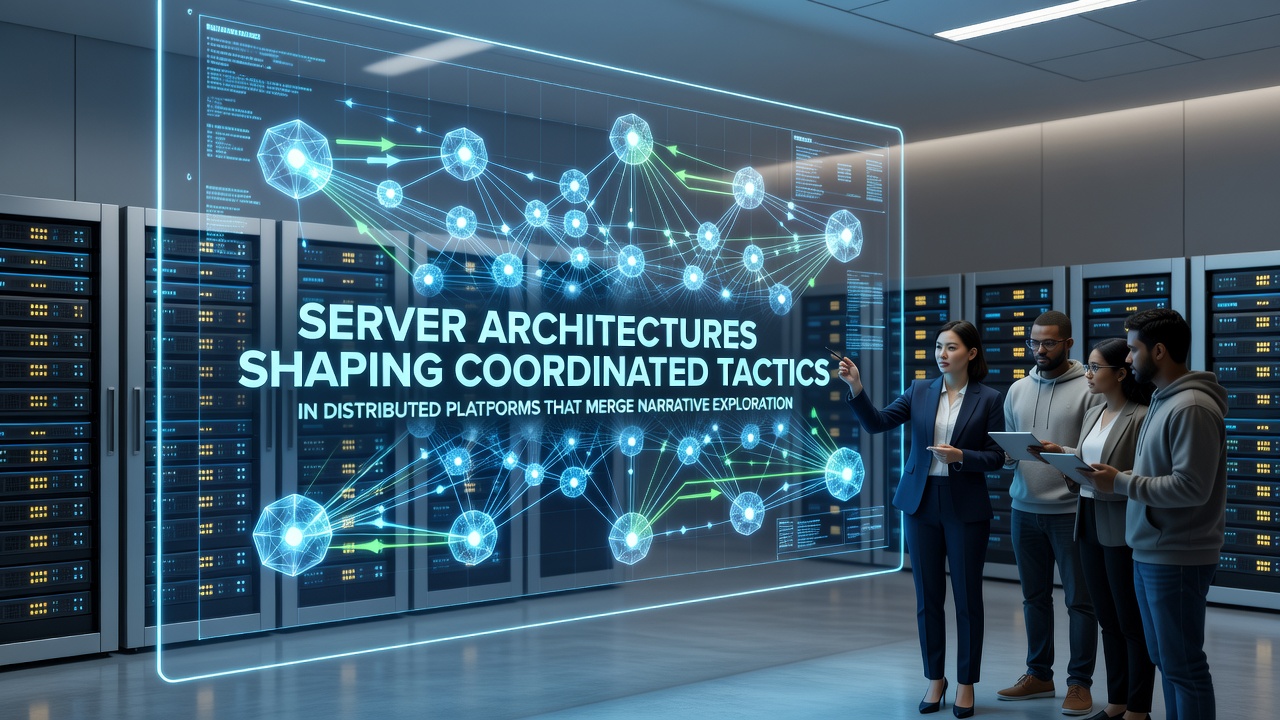
Observers note that platforms running in October 2026 increasingly deploy containerized microservices to isolate contest logic from exploration services. This isolation prevents a single contested race from stalling narrative updates for distant player groups. Figures from network performance analyses reveal that microservice separation reduces average decision latency by measurable percentages across mixed gameplay sessions.
Coordination Patterns Across Player Groups
Teams develop distinct coordination patterns based on how servers expose state information. Some groups assign dedicated roles where one member tracks narrative variables while others monitor velocity metrics in real time. Server architectures that provide granular subscription channels enable these role divisions by delivering only relevant data subsets to each participant.
Additional patterns appear when platforms use sharded databases that split tactical planning data across regional nodes. Players in one shard can plan routes that cross into another shard's velocity zone, and the architecture must reconcile conflicting predictions through consensus protocols. Research indicates that consensus overhead grows with the number of active shards yet remains manageable when shards align with geographic player clusters.
Conclusion
Server architectures continue to evolve as platforms integrate narrative exploration, tactical planning, and velocity contests into unified experiences. The choice between centralized, distributed, or hybrid models directly influences how player groups form and execute coordinated tactics. As deployment patterns shift toward edge-enabled microservices, the technical foundations for these merged gameplay forms become more resilient and scalable across global user bases.