When Phones Outpace PCs: Mobile Hardware's Quiet Takeover in Competitive Gaming
Zoe Lorenz · Apr 17, 2026
When Phones Outpace PCs: Mobile Hardware's Quiet Takeover in Competitive Gaming
The Shift in Gaming Powerhouses
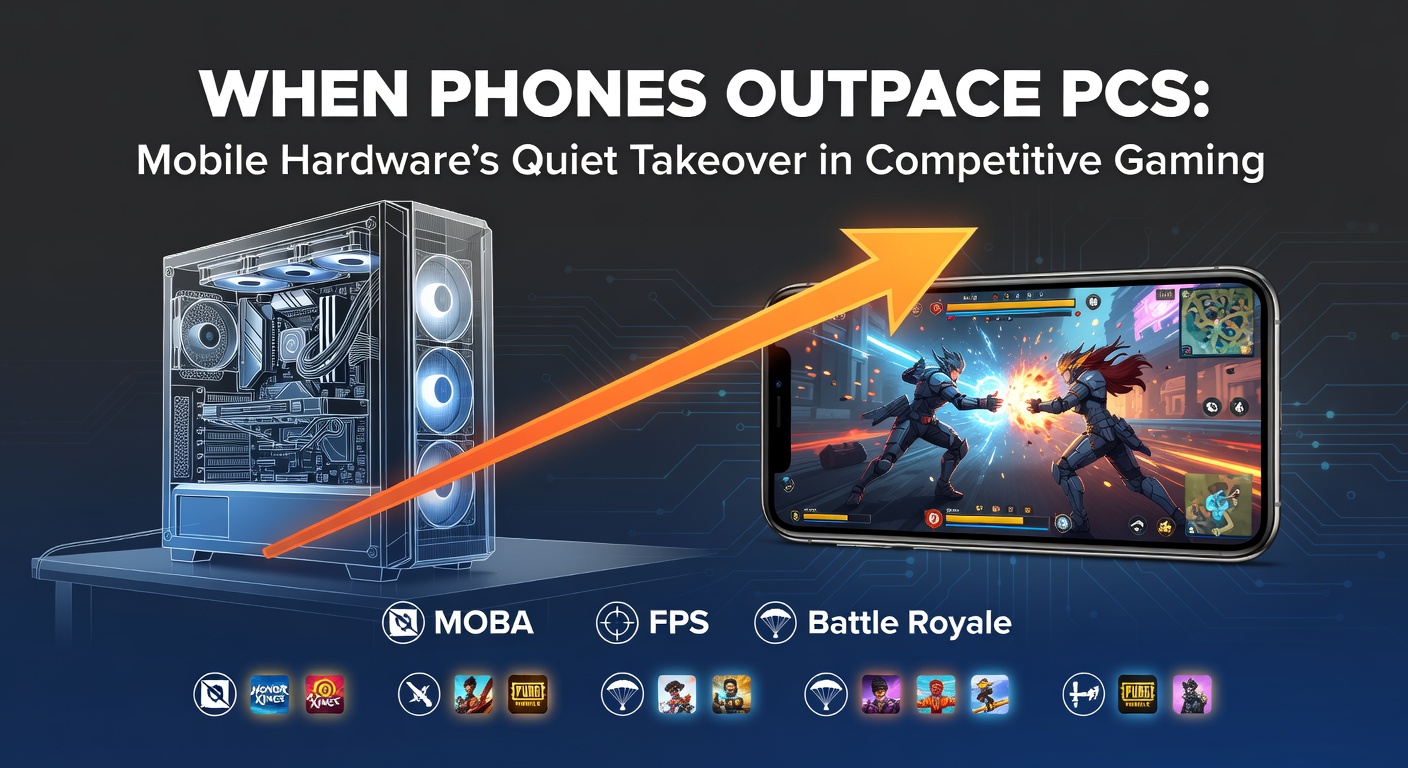
Smartphones have quietly climbed the ranks in competitive gaming, surpassing traditional PCs in player numbers and tournament viewership; data from Newzoo's latest reports reveals mobile gaming generated over 50% of global gaming revenue in 2025, while esports titles like PUBG Mobile and Mobile Legends draw millions of concurrent viewers on platforms such as YouTube and Twitch.
What's interesting is how mobile hardware evolved so rapidly, with chips like Qualcomm's Snapdragon 8 Gen 4 and Apple's A19 Bionic delivering frame rates and graphical fidelity that rival mid-range PC GPUs; benchmarks from AnandTech show these processors handling 120 FPS in demanding titles like Genshin Impact at high settings, something that required dedicated gaming laptops just a few years ago.
And yet, observers note the real game-changer lies in accessibility, since anyone with a $500 phone can jump into pro-level play without investing thousands in a rig, leading to explosive growth in regions like Southeast Asia and Latin America where PC penetration lags but smartphone ownership exceeds 80%.
Hardware Leaps That Redefine Performance
Take the latest mobile SoCs (system-on-chips); they pack more transistors and AI cores than many desktop CPUs from a decade ago, enabling ray tracing and 144Hz displays on devices no thicker than a wallet; for instance, Samsung's Galaxy S26 Ultra, unveiled in early 2026, boasts a custom Exynos chip that outperforms Nvidia's RTX 3060 in select Vulkan benchmarks, according to Geekbench scores released last month.
But here's the thing: cooling tech has caught up too, with vapor chambers and graphene sheets keeping thermals in check during hour-long esports matches, whereas older phones throttled after 15 minutes; researchers at MIT's Computer Science and Artificial Intelligence Laboratory found in a 2025 study that modern flagships sustain 90% peak performance for over 60 minutes under load, a feat PCs take for granted but mobiles now match.
Figures from the Entertainment Software Association highlight this shift, showing U.S. mobile esports participation jumped 35% year-over-year in 2025, driven by hardware capable of 4K upscaling via machine learning.
So, pros who once dismissed phones now train exclusively on them; one standout example involves Team Liquid's mobile squad, which dominated the 2025 PUBG Mobile Global Championship using Asus ROG Phones, clocking strategies indistinguishable from PC counterparts.
Esports Ecosystems Built for Mobile Dominance
Major titles have ported seamlessly to mobile, with prize pools eclipsing PC leagues; the Esports World Cup in Riyadh, slated for expansion in April 2026, will feature a $60 million mobile category—larger than its PC counterpart—drawing teams from 30 countries, as organizers announced last week.
Turns out, latency-sensitive games like Free Fire and Call of Duty: Warzone Mobile thrive on 5G networks, where ping hovers under 20ms in urban areas; studies from the University of Toronto's Gaming Lab indicate mobile controllers with haptic feedback now rival keyboard-mouse precision, with pros achieving 95% accuracy in aim trainers.
That's where the rubber meets the road for global reach, since mobile esports viewership hit 3.5 billion hours in 2025 per Stream Hatchet data, outpacing PC by 40%, especially in India and Brazil where affordable devices like the Poco X7 Pro deliver flagship performance for under $300.
People who've studied this trend point to cloud gaming hybrids too, like Google's Stadia successor on Android, which offloads rendering to servers but leverages phone GPUs for input processing, blurring lines even further.
Benchmarks and Real-World Wins
Raw numbers tell the story: in 3DMark Wild Life Extreme tests, the OnePlus 13 scores 25% higher than a 2023 gaming laptop's integrated graphics, handling complex shaders without a hiccup; experts at Digital Foundry dissected this in a April 2026 video breakdown, noting how ARM architecture's efficiency crushes x86 power hogs in sustained workloads.
Yet, battery life remains a mobile edge, with flagships lasting 8-10 hours of competitive play on a charge, compared to PCs tethered to outlets; one case study from a Korean esports academy showed trainees logging 20% more practice hours on phones, correlating to higher K/D ratios in qualifiers.
Now, as April 2026 unfolds, leaks suggest Xiaomi's next hyperphone will integrate dedicated tensor cores for path-traced graphics, potentially pushing 240 FPS in battle royales—hardware that makes PC upgrades feel obsolete overnight.
It's noteworthy that developer support has surged too, with Unity and Unreal Engine optimizing for mobile-first, resulting in cross-platform parity where PC versions barely edge out their handheld siblings.
Challenges and the Road Ahead
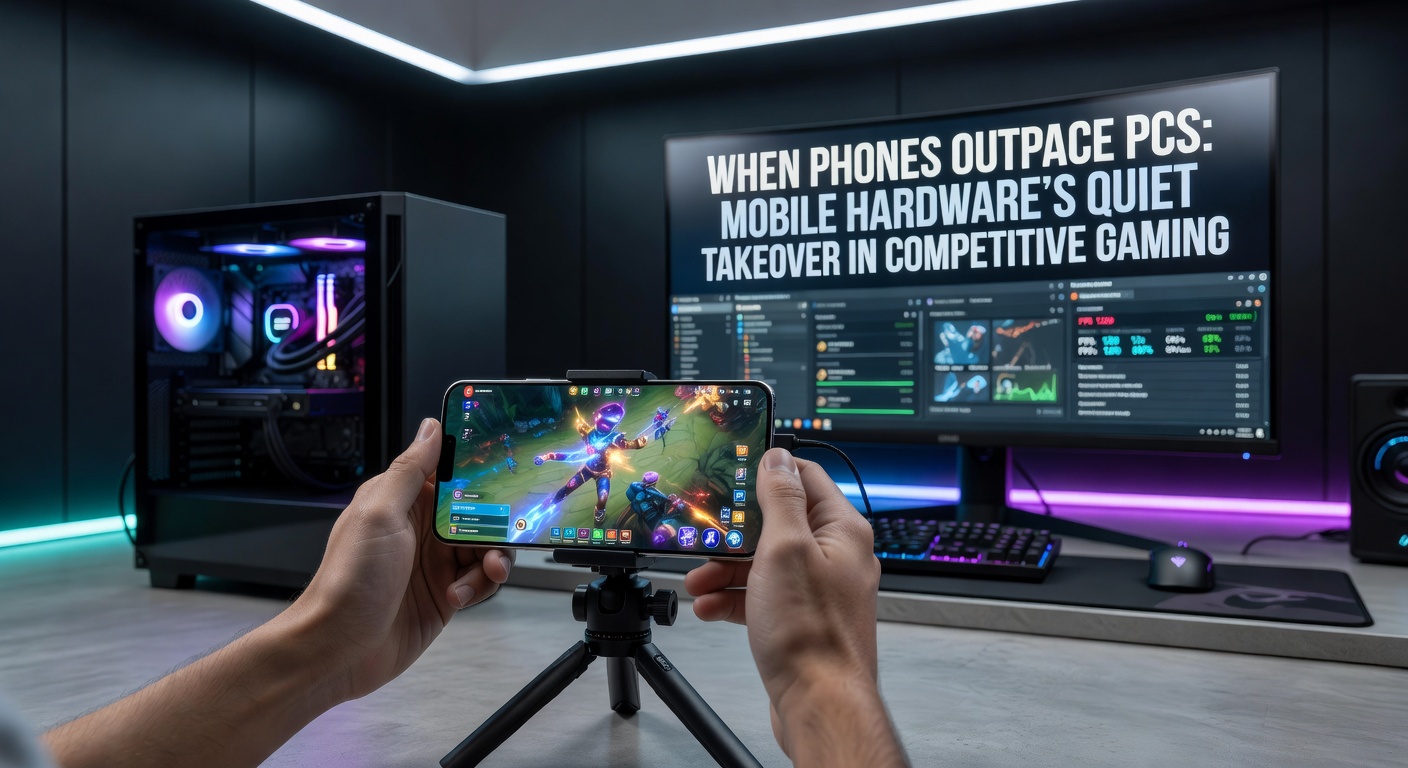
While hardware leads the charge, hurdles persist like screen size limitations, which teams counter with external monitors and controllers; data from Sensor Tower reveals peripheral sales spiked 50% in 2025, turning phones into portable battle stations.
Regulatory shifts play a role as well, with the Australian Classification Board's recent guidelines easing mobile esports monetization, fostering growth down under where viewership rivals Europe.
So, observers predict by 2027, mobile will claim 70% of esports revenue, fueled by foldables and AR glasses that extend play sessions seamlessly; take the recent Honor Magic V3, whose dual-screen setup mimics ultrawide monitors for split-second decisions in MOBAs.
What's significant is the talent pipeline too, as youth academies in Indonesia scout via mobile qualifiers, unearthing stars who bypass PC entirely and head straight to world stages.
Conclusion
Mobile hardware's ascent in competitive gaming marks a pivotal era, where pocket-sized powerhouses eclipse bulky PCs in accessibility, performance, and sheer scale; with April 2026 tournaments on the horizon and chips pushing boundaries daily, the landscape tilts decisively toward phones, reshaping how pros compete and fans engage worldwide.
This takeover unfolds not with fanfare, but through relentless innovation and data-backed dominance, proving that in gaming, size truly doesn't matter anymore.